
Energy Efficiency Day: Where Food Retailers Can Find Refrigeration Savings
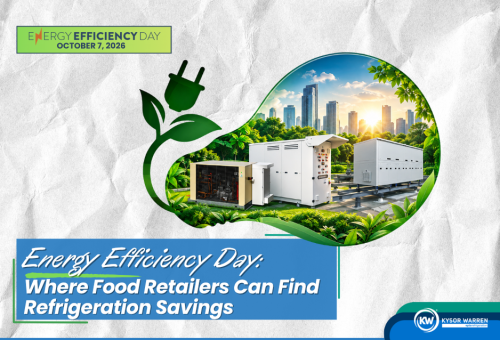
Energy waste in a food store rarely presents itself as a single dramatic problem. It hides in equipment that is larger than the load requires, controls that need adjustment, worn door gaskets, blocked airflow, dirty components, and display cases working harder than necessary.
Each issue may seem small. Together, they can place a steady burden on energy use, equipment performance, and operating costs.
Energy Efficiency Day, observed on October 7, provides food retailers with a useful reason to look closely at the systems that keep their products cold. The goal is not simply to use less energy for one day. It is to identify practical improvements that can support reliable refrigeration throughout the year.
Start With the Right Refrigeration System
Energy efficiency begins before the equipment is installed.
A refrigeration system should match the store’s cooling load, product mix, layout, local climate, and future plans. Oversized equipment may cycle inefficiently and occupy more space than needed. An undersized system may work too hard during busy periods or high ambient temperatures.
Retailers should consider:
- Medium- and low-temperature cooling requirements
- Store size and current refrigeration load
- Local climate conditions
- Indoor or outdoor installation needs
- Refrigerated display case selection
- Planned expansions or store remodels
- Refrigerant choice and long-term sustainability goals
Kysor Warren offers commercial refrigeration systems for a wide range of store formats, including CO₂ systems, distributed systems, parallel systems, outdoor enclosure systems, and condenser or gas-cooler assemblies.
CO₂, also known as R744, is a natural refrigerant that can help retailers move toward natural commercial refrigeration while meeting the demands of food retail applications. The ECO₂ platform offers stores multiple system sizes and configuration options, allowing equipment to be selected for each project rather than forcing every store into the same solution.
A well-matched system has a better foundation for efficient performance from the first day of operation.
Let Controls Handle the Details
Modern refrigeration controls can respond to changing store conditions far more precisely than fixed settings and manual adjustments.
A grocery store’s refrigeration load changes throughout the day. Customer traffic increases, doors open more frequently, products are restocked, outdoor temperatures shift, and defrost cycles add temporary demand. Controls help the system respond without using more energy than the conditions require.
Retailers can review:
- Temperature and pressure settings
- Defrost schedules
- Compressor staging
- Fan operation
- Floating suction and head pressure strategies
- Alarm settings
- Case and system monitoring
- Trends in energy use and equipment performance
Advanced controls only deliver value when they are commissioned correctly and reviewed regularly. A sensor that has drifted out of calibration or a schedule that no longer matches store operations can quietly increase energy use.
Monitoring data can help teams identify unusual cycling, temperature changes, extended compressor run times, and other warning signs before they become larger problems.
Treat Maintenance as an Efficiency Tool
Maintenance is often discussed in terms of avoiding breakdowns, but it also has a direct connection to energy consumption.
A refrigeration system may continue cooling while gradually losing efficiency. Fans, compressors, and other components then have to work longer to maintain the required temperatures.
A strong maintenance review should include:
- Cleaning condenser and evaporator coils
- Checking fan motors and blades
- Inspecting door gaskets and closures
- Confirming case temperatures and setpoints
- Checking refrigerant levels and signs of leakage
- Keeping return-air paths clear
- Reviewing defrost performance
- Inspecting electrical connections and controls
- Confirming that alarms and monitoring systems work correctly
Preventive maintenance supports efficiency and protects product quality, equipment lifespan, and store uptime. A clean, properly adjusted system usually performs more consistently than one that waits for a failure to reveal the problem.
Look at the Display Cases
The refrigeration rack receives plenty of attention, but the display cases are where cooling meets the sales floor.
Case design, fans, lighting, doors, airflow, and stocking practices can all influence energy performance. A system cannot operate efficiently if cold air repeatedly escapes or if circulation is blocked by products.
Retailers should look for display case features such as:
- High-efficiency fans
- LED lighting
- Effective door seals
- Quiet and dependable door-closing systems
- Night curtains where appropriate
- Easy access for cleaning and maintenance
- Natural refrigerants in self-contained models
- Clear product visibility without unnecessary cooling loss
The Opera T refrigerated display case uses R290 propane, a natural refrigerant, and includes high-efficiency fans. Its plug-in format supports flexible placement across sales environments ranging from minimarkets to hypermarkets.
Efficient display cases can support sustainable commercial refrigeration while giving shoppers a clear, attractive view of refrigerated products.
Do Not Overlook Daily Store Habits
Equipment selection matters, but daily operations can either protect or reduce those efficiency gains.
Overloading a case can block airflow. Leaving doors open during stocking allows cold air to escape. Damaged gaskets, incorrect temperature adjustments, or uncovered night curtains can make equipment work harder than planned.
Store teams can support energy-efficient refrigeration systems by:
- Following case loading limits
- Keeping air grilles and returns unobstructed
- Closing doors promptly
- Reporting damaged seals or unusual noises
- Using night curtains correctly
- Avoiding unnecessary temperature changes
- Responding quickly to alarms
These habits are simple, but their impact grows across every case, every aisle, and every day of operation.
Measure Before and After
An efficiency project needs a clear starting point.
Retailers can record energy consumption, case temperatures, alarm activity, service calls, and compressor run times before making changes. The same information can then be reviewed after maintenance, control adjustments, or equipment upgrades.
Useful measures may include:
- Monthly refrigeration energy use
- Temperature stability
- Compressor operating hours
- Frequency of alarms
- Emergency service visits
- Product loss linked to temperature problems
- Maintenance costs
The strongest savings plans are built on store data rather than assumptions. Measurement helps retailers identify which improvements are working and where further attention is needed.
Make Efficiency Part of Everyday Refrigeration
Energy Efficiency Day is a reminder, but refrigeration efficiency is built through daily decisions.
The right system creates the foundation. Accurate controls help equipment respond to changing conditions. Preventive maintenance protects performance. Efficient display cases reduce unnecessary demand, while store teams help preserve those gains through proper operation.
Together, these steps can lower energy waste, support product quality, reduce strain on equipment, and strengthen a retailer’s sustainable commercial refrigeration strategy.
To discuss energy-efficient refrigeration systems for your store, contact the Kysor Warren sales team.